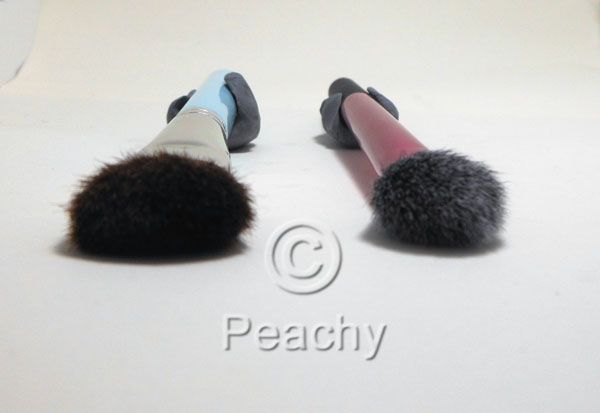
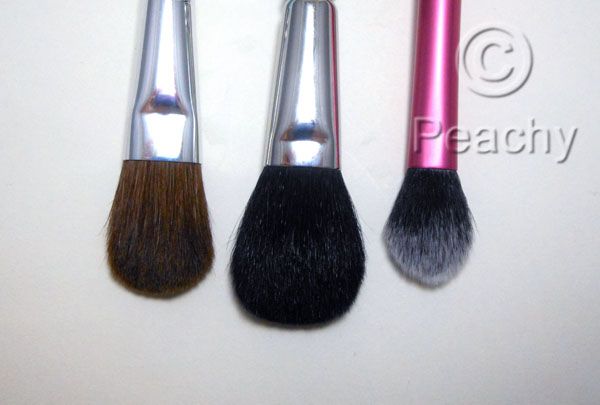
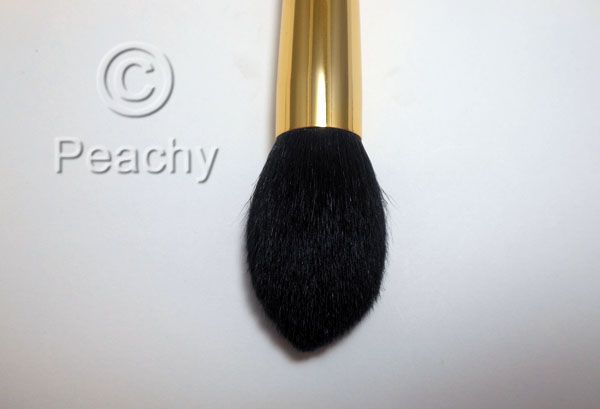
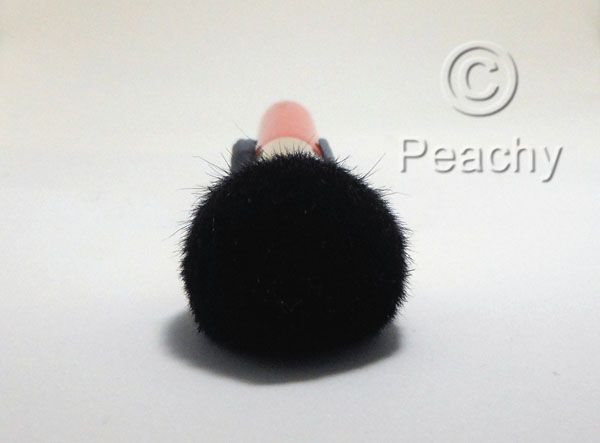
Showing posts with label MAC. Show all posts

Friday, August 16, 2013

A Guide to Brushes: Contour Brushes

This post, which could be considered "Blush Brushes: part 2" is about brushes intended for contour and angled blush brushes whether or not they're intended (by manufacturer) for contour.
 
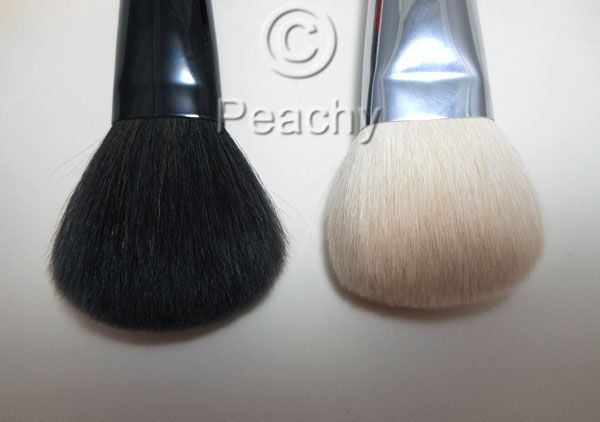
Angled Blush Brush
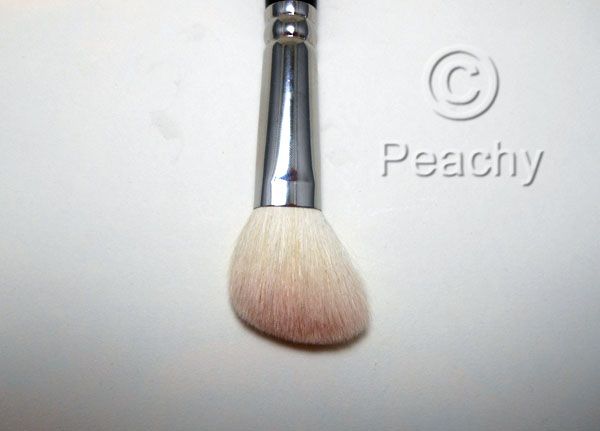
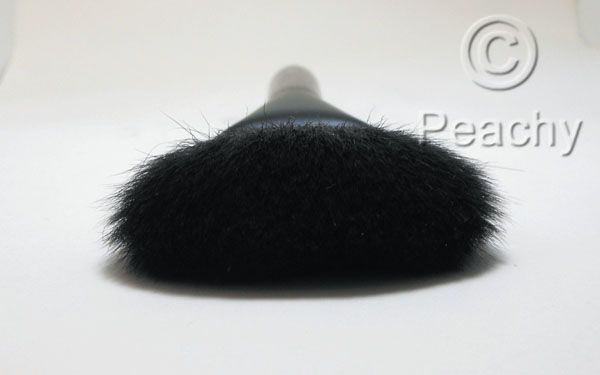
This MAC 168, which is white goat, is both a blush brush and a contour brush.  Now, I don't favor this sort of brush for cheekbone contour, as I prefer more exactness from my contour brushes.  It makes for a good blush brush though, especially if you want to apply blush to the cheekbones.  It's also good for facial contouring: around the perimeter of the face, to decrease the width of the face, under the chin, or temples.  The white goat of this particular brush is usable for powders, creams, and liquids.  It's okay, then, but not great, for cream blush or contour, and it's great for liquid foundation.
Sorry, there's no "cross-section" photo for this brush.
 
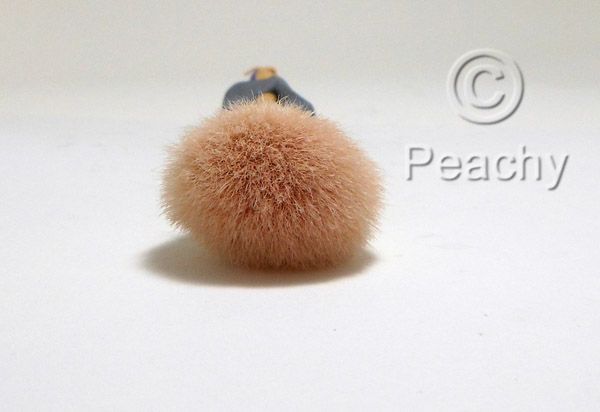
Fluffy Angled Blush Brush
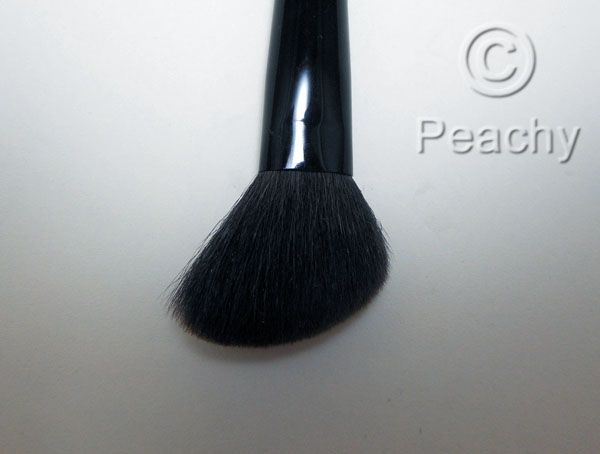
This brush, the Paula Dorf Cheek brush is a fluffier, softer version of the angled brush above.  It's intent is to fit over the apple of the cheek, and it's good for that.  It's a bit fluffy for placing contour, but it makes for a good blending brush.  It's good for applying blush (or contour) to a wide area, so appropriate for larger faces, or when you want a big, child-just-in-from-the-cold, blush.
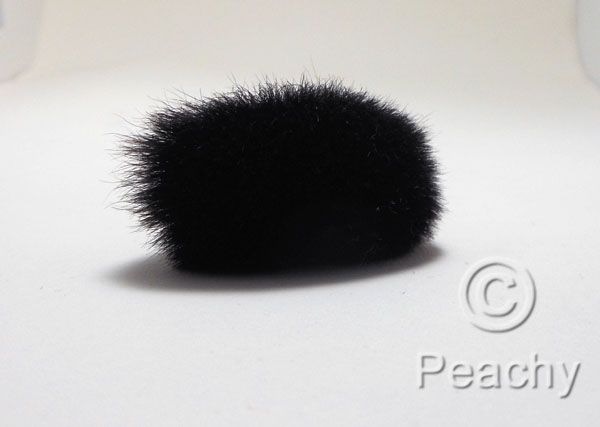
 
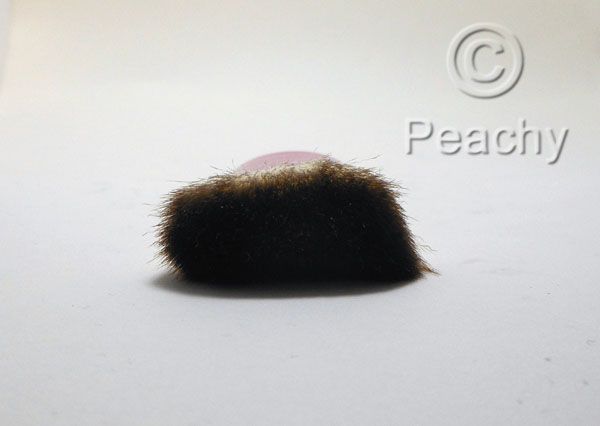
See how fluffy the hairs are, and how much space between them?  This means not too much pigment will be desposited on the cheek, but it will be in a wide area.  If that's what you want, this is a good style for that.  I have come to prefer smaller blush and contour brushes, so this style has fallen out of use with me.
 
Angled Synthetic Cream Blush Brush
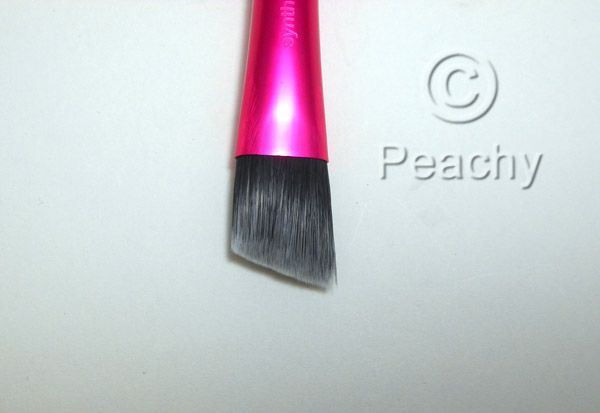
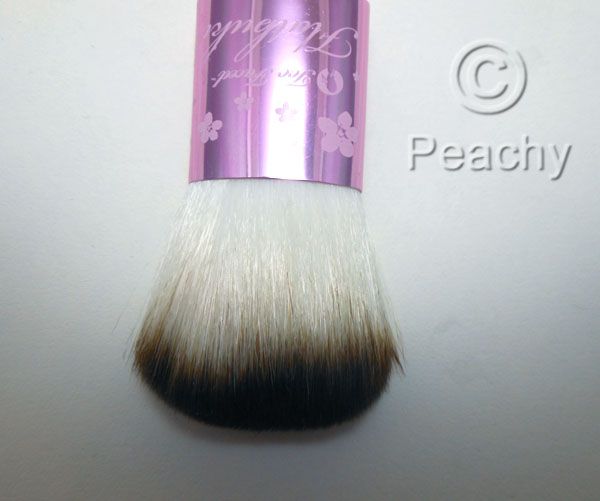
This Sephora I.T. Cream Blush brush is tight, synthetic, and very flat.  It's good for placing cream or liquid blush and contour.  It's not great for blending them, unless you're looking for a very controlled blend by fanning out the color.  This is a technique often used in stage makeup aging techniques to create a shadow with one soft, blended side and a hard line, for instance, in creating naso-labial folds.  You could use this technique to create a very strong, stylized contour.  You draw a line of product, then place a flat brush on the line, as if you were drawing the line again and pull away the color to one side.  Then this fanned out area is blended traditionally.
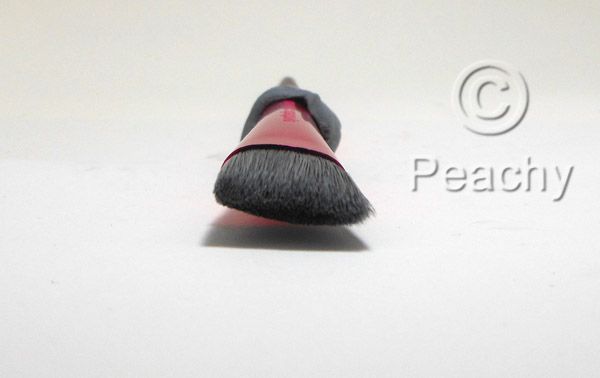
This brush type is good for cream blush, great for contour, and isn't a bad liquid or cream foundation brush.  While I don't believe it's good for true blending of cheek products (other than the technique described above, which, let's admit, is a pretty specialized technique), it is good for a final blending and working together of already applied and blended cream or liquid products.
 
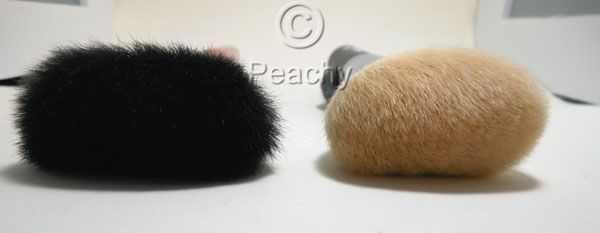
Round Contour Brush
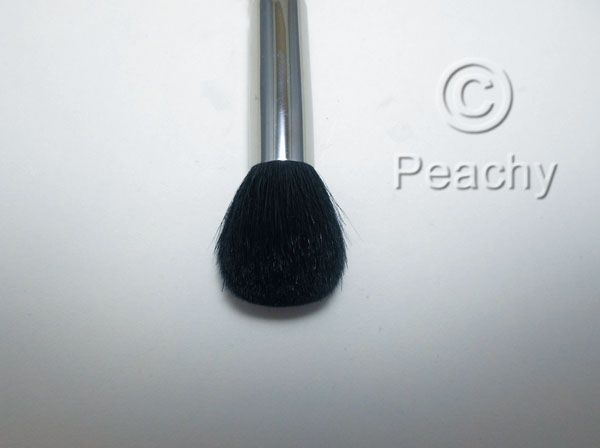
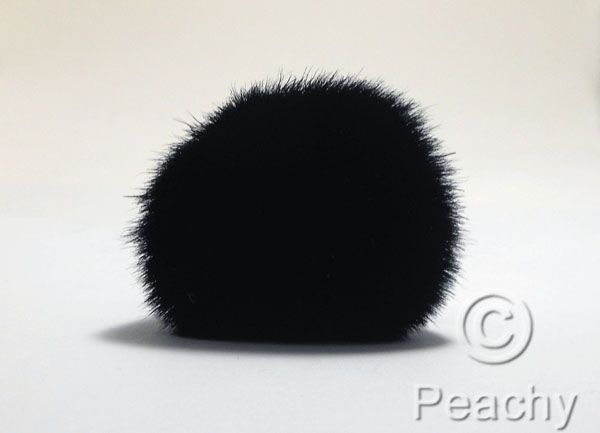
I think this brush, here a MAC 109 of goat hair, is what most people picture when I say "contour brush."  It bears a close resemblance to foundation buffing brushes, a use for which this particular brush gained a cult following.  It also gained a notoriety for shedding.  It's good for pretty bold, though not necessarily distinct, cheek contour and is good for under the jaw contouring and around the perimeter of the face. 
This brush is also good for the doll cheeked, so-called "pop of color" on the apples look.  Can we please all agree to ban the word "pop" from the beauty vocabulary?  How about "concentrated placement of a bright color?"  "Emphasis through color?"  Or the simple and straightforward "accent?"  Do you know what I think of when I hear "pop," especially the Yahoo! Answers-esque "How do I make my eyes pop?"  From the time I was a little girl to my early twenties, my family and I went on a yearly vacation to a small inn on the Northern Californian coast where there was a big party in the mountains.  Freshly caught abalone, tons of wine (not for the kids, of course), fish stew, the cold waters of the Pacific Ocean, the stunning cliffs, the redwoods--the party sucked for this kid, but the scenery was the stuff of magic and mystery.  Well, as the abalone divers aged out over the decades, the younger generation took to the water, often bringing along their diving friends (as the legal limit for each diver is very small, the more divers, the more weird, tough, slimy shellfish for breading and frying).  Well, one year when I was a teenager, one of those friends had ever-so-slightly more than normal bulging eyes at the party.  When prompted, he explained that he had not properly pressurized his mask while diving, and his eyes literally popped out of his head while underwater, and that they hadn't quite normalized yet.  (I must put the caveat that I have no idea if this story is true, or even plausible, but it left quite the impression on me, nonetheless) So, uh, yeah...no more popping eyes, okay?  Or blush.  But that thing we're agreeing to not say anymore?--this brush is good for that.
 
Pointed Contour Brush
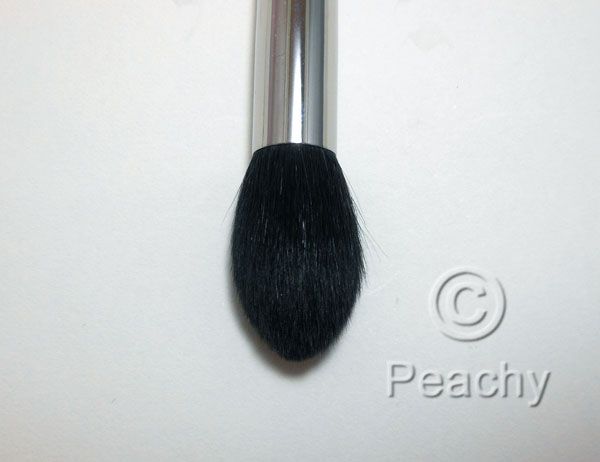
This pointed brush, a Hakuhodo G5521BkSl, blue squirrel and goat, is great for cheekbone contouring and all facial contouring.  If the brush is small enough (this is), it could also be used for nose contouring and blending of nose contouring.  The pointed tip allows for very careful placement of contour, which results in the ability to carefully sculpt the face.  This is one of my favorite shapes for contouring.  It's equally good for highlighting all parts of the face.
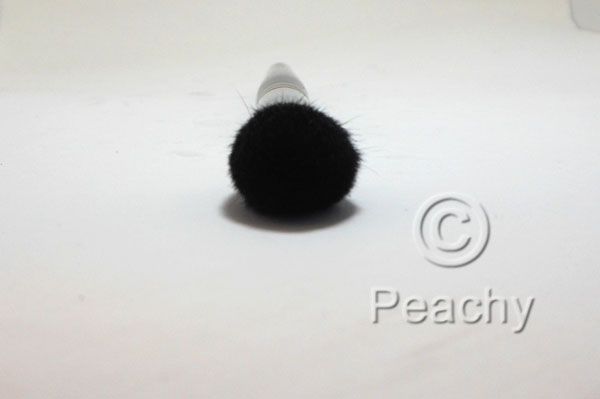
This brush isn't a great blush brush, however.  It applies blush in too concentrated an area even for me.  If you want an all around brush for both blush and contour, this isn't likely to be it.  However, if you want a great contour brush, this might be the shape for you.  The larger of this style, featured in my powder brush post http://bepeachy.blogspot.com/2013/04/a-guide-to-brushes-powder-brushes.html, is another good, one.
 
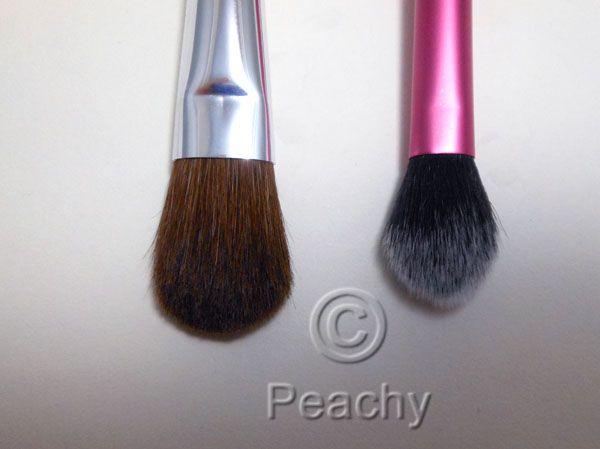
 Soft Pointed Brush
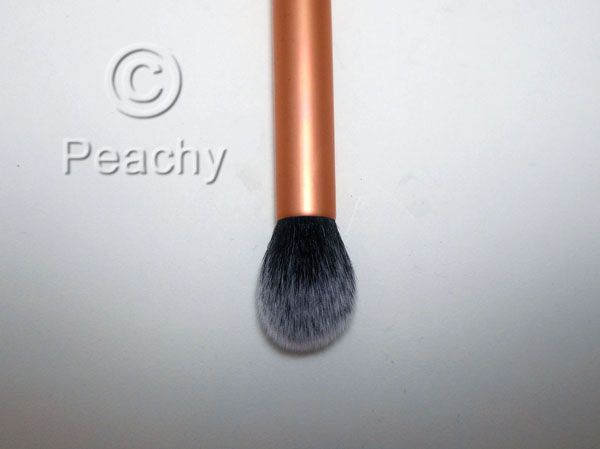
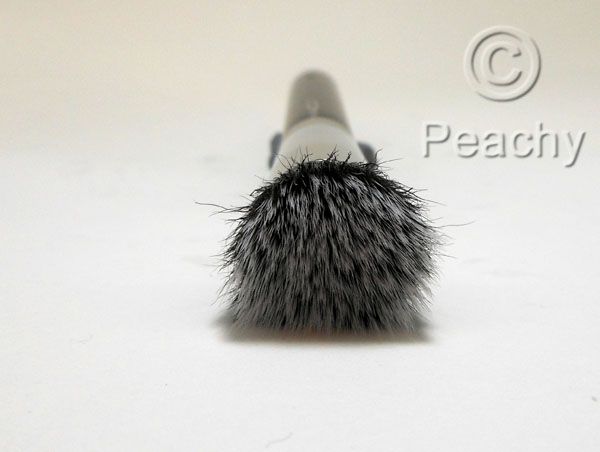
I had a lot of trouble coming up with a title for this brush example.  I toyed with round/pointed brush, but that sounds confusing and nearly lumped it with the pointed brush above.  Truth be told, this brush, a Real Techniques synthetic Contour Brush, combines elements of both the round and the pointed brushes.  It's wonderfully directional, but it's softly rounded end makes it better for blending and for less distinct contouring under the cheekbones.  Because this brush is synthetic, that makes it good for cream blush and contour. 
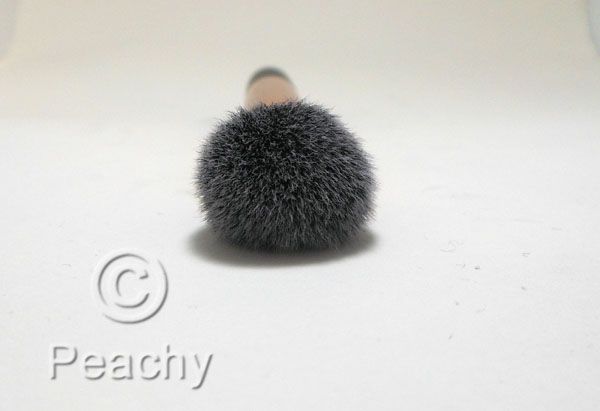
It's also a great blush brush.  I've used this brush on a lot of faces for blush, and it's great.  If you want an all around blush and contour brush, this is a good (and inexpensive) choice.
 
Square Contour Brush
This flat, square brush, a Sonia Kashuk Flat Top Sculpting Brush, which is goat, is good for a strong cheek contouring of either powder or cream.  If you like to contour with creams under your foundation, a technique used by Wayne Goss on Youtube, and by Scott Barnes, for example, this is a good brush to apply the contour.
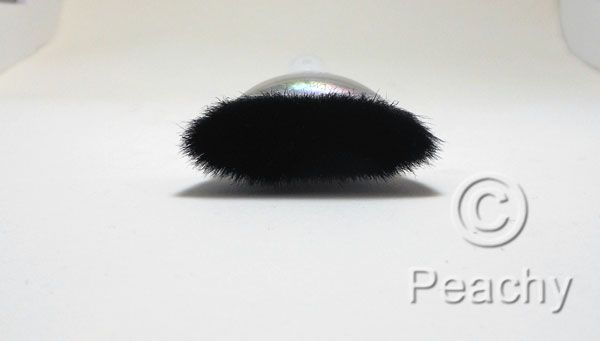
This brush is uni-tasker, but it's very good for that one task.
 
Flat Shading Brush
This Tom Ford Shade and Illuminate Brush, reviewed here:  http://bepeachy.blogspot.com/2012/02/tom-ford-shade-and-illuminate-review.html, may be one of a kind in shape.  It's like a large synthetic flat shader brush.  It's good for cheekbone and temple contouring with cream products. 
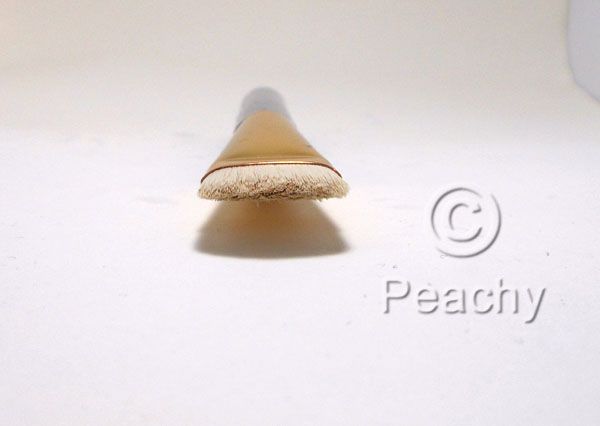
This brush is also great for highlighter; actually, it's fantastic for cream or liquid highlighter. 
 
Pros and Cons
Pros:    Contouring has been gaining popularity in recent years, whether it's the over the top, drag-influenced look of Kim Kardashian and her ilk, or the high fashion look on the runways.  While contouring for every day might not be your style, for special occasions or photography, you may want to try it out.  These brushes allow for dedicated brushes for this purpose, though some of them double as blush brushes. like the rounded and soft pointed brushes. 
Cons:  Most of these brushes are unitaskers, and, if you're a brush collector like me, that doesn't matter, but if you want to pare down to as few brushes are possible, you'd probably want a brush that does more than one thing.  Especially if you only contour occasionally.
 
The brushes featured in this post are:     MAC 168 Large Angled Contour Brush, Paula Dorf Cheek Brush, Sephora I.T. Cream Blush Brush (discontinued), MAC 109 Small Contour Brush, Hakuhodo G5521BkSl Highlight Brush Pointed, Real Techniques Contour Brush (from the Core Collection), Sonia Kashuk Flat Top Sculpting Brush (discontinued), Tom Ford Shade and Illuminate Brush.  All brushes featured in this post were purchased and I received no compensation for featuring them.

Wednesday, July 24, 2013

A Guide to Brushes: Blush Brushes

Blush brushes are, without a doubt, the most important and useful brushes a makeup lover can own.  Okay, maybe I'm biased as a devoted blush lover, but really, aside from the teenager I witnessed applying blush by rubbing the product directly on her cheek, powder blush is really difficult to apply and blend without a good brush.  So, read on to help you find one.
 
Classic Blush Brush
MAC 129, goat, Dior Blush Brush, Real Techniques Multi-Purpose Brush, synthetic
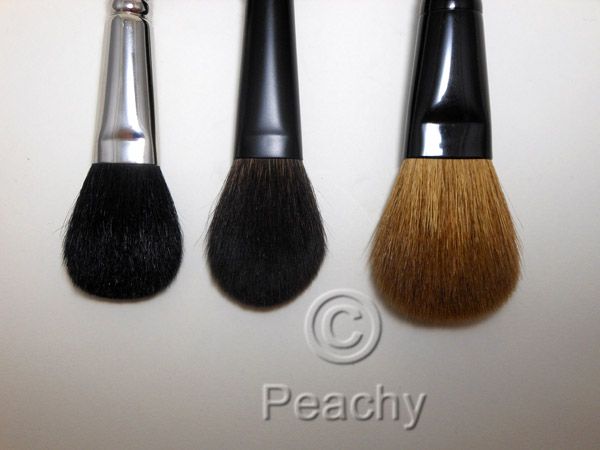
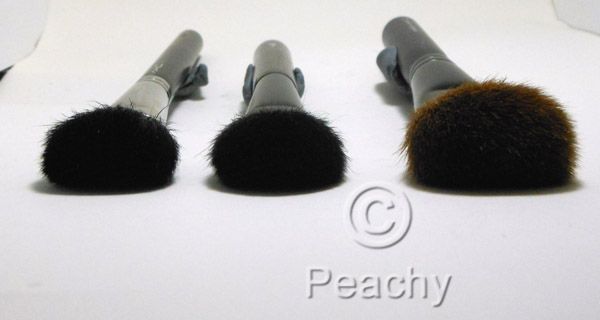
Dense and fluffy, I refer to these brushes as classic for a reason.  They are sized to apply blush over the apples of the cheeks in a classic fashion.  They're great for medium pigmented blushes when you want to apply over a large area on your cheeks.  They have pinched ferrules, but they tend to have a lot of bristles and they fluff out a lot.  This makes them pretty good blenders and good for bronzer, if you wear it. 
For highlighting or contouring (which will be the next post in this series), this would not be directional enough to place the color precisely.  Similarly, they are not good for applying color to the cheekbones only.  The fluffy bristles are not well suited to either densely pigmented blushes or sheer blushes, as the former would end up with too much color on the cheek, and the latter would mean little color was applied to the cheek.
 
Small Blush Brush
MAC 116, goat, Hakuhodo Kokutan Blush S, blue squirrel/synthetic, and Sephora Classic Complexion 53
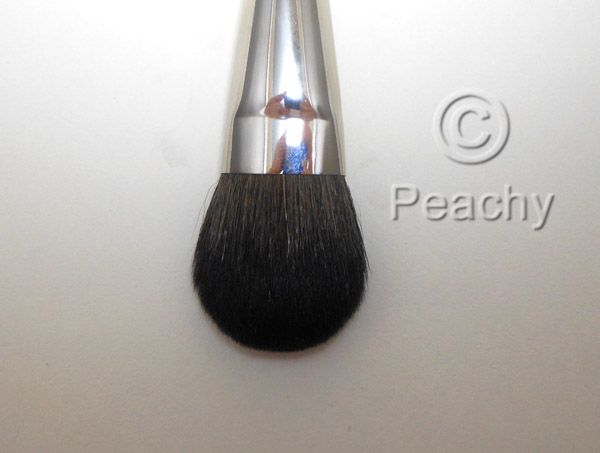
The less fluffy and smaller little sister of the classic blush brush, these brushes also have a pinched ferrule.  They do not splay or fluff as much as the classic blush, however, and this makes them better for applying blush to a smaller area.  You can still use these for the apples, but they also make for fine contour and highlight brushes, and are great for applying blush to the cheekbone area. 
Perhaps more than any other brush, the hair fibre will make a big difference in the performance of the brush.  The goat MAC116 and the blue squirrel/synthetic Hakuhodo Kokutan Blush S will apply a different level of pigment to the skin.  The softer hair is therefore better for more pigmented blushes when you want a lighter touch with them.  No matter what hair you choose, this is my favorite blush brush for all around blush application.  They make it easy to build up color in layers and apply a variety of products easily.
 
Flat, Round Blush Brush
Trish McEvoy Sheer Blush 2B
Featuring a very pinched ferrule, this blush brush is like a larger flat shader brush.  Instead of using the tip of the brush in circular motion, this brush is great for patting on blush.  That makes it great for a (forgive me for using this cliched term) pop of color on the apples of the cheeks.  This is also one of my favorite powder contour brushes because the patting motion allows for dense application in some places and lighter application elsewhere--instant blending.
This is not a blending brush, however, and works best with sheer to medium pigmented blushes.  I don't often use this for blush application.
 
Yachiyo Brush
Hakuhodo large pointed yachiyo, goat
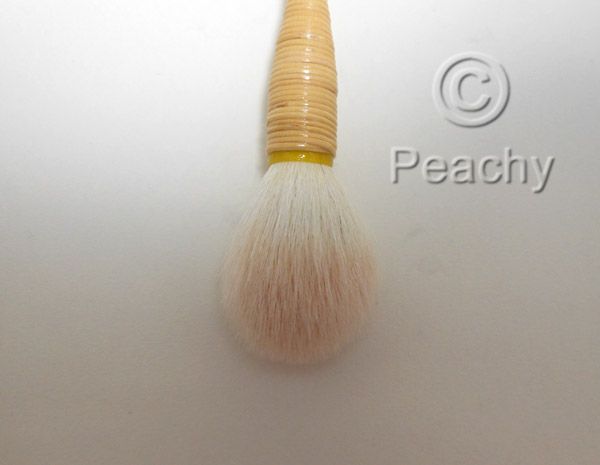
This is supposedly a traditional Japanese brush; I can't vouch for that since I know nothing about Japanese traditions outside of woodblock prints in an art appreciation class in college.  It's certainly traditional looking, with its cane wrapped handle and lack of a visible ferrule (though I imagine there's one under all that cane).  This is one of my favorite blush brushes.  I like it for sheer blushes, but I also find the dense, stiff hairs great for getting a small amount of a denser colored blush, too.
Yachiyos also come in less pointed versions (called "purple" by Hakuhodo.  I don't know why.), but they all share a round "ferrule."  They are great for contouring, especially the pointed version, which fits nicely under the cheekbone and jawline.  Another great all around blush brush.
 
Pros:     You need a blush brush; don't even try to argue with me.  If you are not already wearing so much blush your neighbors think you may be an 18th century French prostitute, get yourself one of these brushes and one of the beautiful powder brushes from a brand like Tarte, Illamasqua, Chanel, Burberry, or any of the other brands that make awesome blushes, and fix that because blush is life and life is blush.  Er...what I really meant to say was big fluffy classic blush brushes are good for apples of the cheek and medium pigmented blush, small blush brushes are good for all around blush application and any sort of blush, flat, round blush brushes are good for sheer application, contour, and bright colors on the apples, and yachiyos are good for getting the most out of sheer or dark blushes and contour.  And they can all be used to apply powder, too.
Cons:   Repeat after me, there are no cons to blush.  The classic blush brush is probably too big for most people's faces.  And I guess you don't need a powder blush brush for cream blush.  I tend to use stippling/duo fibre brushes for that.  If you were to want more information on that subject, see my ground-breaking stippling brush post here:  http://bepeachy.blogspot.com/2012/12/a-guide-to-brushes-stipplingduo-fibre.html.
 
The brushes featured in this post are:  MAC 129 Powder/Blush Brush, Dior Blush Brush (this is pretty old, the handle is different and the name has changed, so I have no idea how the cheek brush currently in their line compares to this one), Real Techniques Multi-Purpose brush (from Travel Essential set), MAC 116 Blush Brush, Hakuhodo Kokutan Blush S, Sephora Classic Complexion 53, Trish McEvoy Sheer Blush 2B, Hakuhodo Large Pointed Yachiyo.  All were purchased by me and I receive no compensation for featuring them.


Friday, April 19, 2013

A Guide to Brushes: Powder Brushes

Powder brushes really don't need much introduction, do they?  They're used to either apply powder or to remove excess (old school style!) 
 
Large Powder Brushes
I probably should have put a smaller brush for comparison with these suckers because they are huge.  Pictured here are a Smashbox 1 and Cover FX Powder Foundation Buffing Brush 190, which is goat, and they are good for applying powder over the face, especially if you have a large face.  They're so big, they're best for applying powder as a first or second step; that is, if you are wearing powder foundation, or loose powder over your whole face on top of tinted moisturize, this is a good brush to do that with.  If you'd rather apply a controlled application of powder around already made up eyes and lips, or just to the T-zone, these are not the brushes for that.  In fact, they are so large, some people might find them better for use on the body, to apply shimmer powder on decolletage or shin bones and clavicle or to set a large tattoo cover.
If you are a fan of vintage makeup or stage makeup, then you probably know that the "classic" use of a powder brush is not to apply powder but to remove it.  I always cringe when I see someone try to "set" makeup, like cream foundations, with a brush.  Even when pouncing it on the skin (something I have seen YouTube's Pixiwoo sisters do) doesn't seem to lock it onto the skin the way a puff does.  To set makeup, a puff should be dusted with powder then pressed into the skin.  Any excess powder is then dusted off with a brush.  Uh, yeah, this is the type of brush you want to use for that. 
 
Small Powder Brushes
Do you remember how I said above that the large brushes were too large for concentrated powder application?  These brushes are what you want for that.  Small brushes like the Sue Devitt Powder Brush, pony hair, and the Real Techniques Setting Brush, synthetic, are great for going around lips, eyes, and nose, for applying powder to the T-zone.  If you apply powder as a last step, then you want a small brush.  They are also good for setting powder under the eyes, or applying powder to the eyelids.
Aside from powder application, these small brushes are good for applying highlighter to the cheekbones and blending it down the nose.  I also often use whatever powder brush I use on a given day to additionally blend my blush into my base.
Oh look!  I remembered a comparison photo for these babies!  This is a MAC 116 blush brush to show you how tiny these brushes are.
 
 Pointed Powder Brush
Another larger style brush, this Hakuhodo S103 goat hair brush works more like a smaller brush due to it's compact shape.  I have to admit to wanting to quote my idol, Lisa Eldridge, and call it directional like she would, but I'll refrain.  It's good for applying powder in small areas and around features, but can also apply a layer over the whole face.
The pointed powder brush is also amazing for applying brush to all parts of the cheek, and is superb for applying contour under the cheekbones, around the jaw, down the neck, around the clavicle.  In fact, I love it for contour so much that I probably should have put it under that heading.  It's also an awesome powder brush, though, and is the brush I'd most suggest if you came here looking for one brush to apply all powder face products.
 
Flat Topped Powder Brush
This brush, a Hakuhodo G527 goat hair brush, is a cousin to the flat topped foundation brush, and is, in its essence, a buffer.  It's great for buffing in powder foundation, which is what I usually use it for.  It's also a great blender for getting blush, powder, highlighter, and foundation seamless.  I know some people would use it to buff powder onto the whole face.  I don't do that.  Just talking about it makes me squeamish.  I'll buff in foundation, powder foundation, blush, even, but I'm very protective of my foundation and especially my concealer, once they are applied.  See my vent on setting makeup above.  Perhaps it's my oily, naturally shiny skin that makes me so anti-buffing when it comes to powder.  Nearly everything will move on my skin, so once I apply foundation and concealer, I want to set it and then not mess with it.  I have enough problems covering the red spots blemishes leave on my chin than to risk removing my concealer with buffing.
Now that I've dealt with one pet peeve about this sort of brush, it's time to deal with the real question you're asking is: Can you use it for liquid foundation?  I never have.  I usually use synthetic brushes for foundation, with the occasional white goat hair detour, so I would never use a dense natural hair brush for liquid foundaton simply because I wouldn't want to subject such a brush to the cleaning I give my foundation brushes.  I can't even imagine how much cleaning liquid foundation out of this thing would be!  Also, I prefer rounded edges on my buffing brushes, since faces are more round than flat.  I'm making this brush very complicated.  It's a good powder buffing brush, end of story.
 
Kabuki Brush
Another buffer, this synthetic Make Up For Ever kabuki brush, is used to buff powder.  I will not bore you again with my diatribe on buffing powder over foundation.  This brush is good for finishing, blending everything together, buffing on powder foundation.
This one came in a set with the HD Microfinish powder, and I still don't know why.  I have brushes I like better to apply powder foundation with, so this one just sits in a drawer.
 
Flat Kabuki Brush
This is a flattened kabuki brush, and is a cute little mini from Too Faced, called a Flat-buki.  It's good for flicking powder off the face after applying too much.  Really, it's just a cute tiny brush.  Good for travel.
 
Finishing Brush
This Hakuhodo Finishing Brush L, made of blue squirrel and synthetic hair, is pure luxury.  It isn't a necessity.  It's also not something to save on; it's a splurge, no doubt.  It's also akin to rubbing a bunch of kittens over your face.  Not that I've done that.  But I imagine it would feel good unless claws got involved.
This brush is used for brushing over the face as a last step, softening edges without moving anything around (which is good, remember?).  It can also apply a finishing powder, like Guerlain's Meteorites. 
 
Fan Brushes
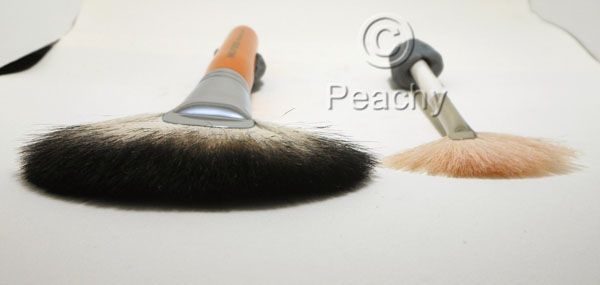
Fan brushes like the Make Up For Ever powder fan brush and Benefit fan brush (goat), are good for brushing away eyeshadow fallout.  They are also good for contour and highlight.  The smaller fan brush is especially good for highlighter and softening super-pigmented blushes. 
They are also excellent for removing powder after it's been applied.  Look, at this point, we all know that powder brushes apply powder--do I really need to say it again?
 
Pros and Cons
Pros:  Unless you want to try applying powder with your hands (don't laugh, it can be done), you'll probably need a powder brush.  Even if you favor a puff, a brush will remove the excess and leave only a fine layer.  A large powder brush will dust powder over the whole face quickly, while smaller powder brushes apply it to one small area at a time.  If you want a powder brush that does everything from all over powder application to cheekbone contour, I'd suggest the pointed powder brush.  Finishing and Fan brushes finish the face and provide a delicate finish.  Flat top and kabuki brushes are great for applying powder foundation, including mineral foundations.
Cons:  As brushes go, the price point of all of these is higher than average, due to their larger size.  Furthermore, uncut ends, recommended for use with all powder products, but especially when you are using it over the skin, will make the price go up.  I will say this one more time: if your makeup needs to be set with powder because it doesn't set on its own, for example a cream (not cream-to-powder) foundation or blush (basically, if your grandmother might have worn the product back in the day) or a liquid foundation that doesn't dry down, a brush is not the powder utencil to use. 
 
The brushes featured in this post are: Smashbox 1 Powder Brush, Cover FX Powder Foundation Buffing Brush 190, Sue Devitt Powder Brush, Real Techniques Setting Brush, (MAC 116 Blush Brush), Hakuhodo S103 Powder-Blush Brush Pointed, Hakuhodo G527 Powder Brush D, Make Up For Ever HD Kabuki Brush, Too Faced Flatbuki, Hakuhodo Kokutan Finishing Brush L, Make Up For Ever Powder Fan Brush, Benefit Fan Brush (discontinued).  All were purchased and I received no compensation for featuring them.
Monday, December 3, 2012

A Guide to Brushes: Stippling/Duo-Fibre Brushes

Stippling/Duo-Fibre Brushes
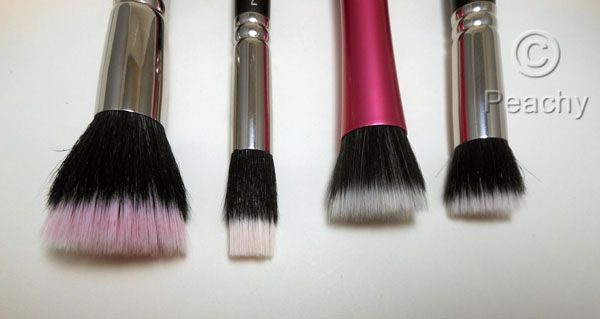
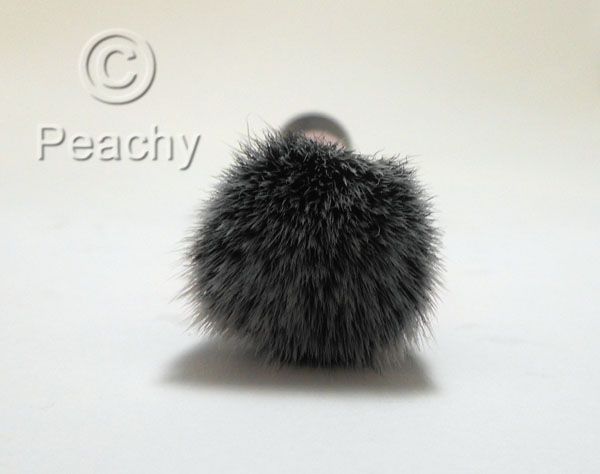
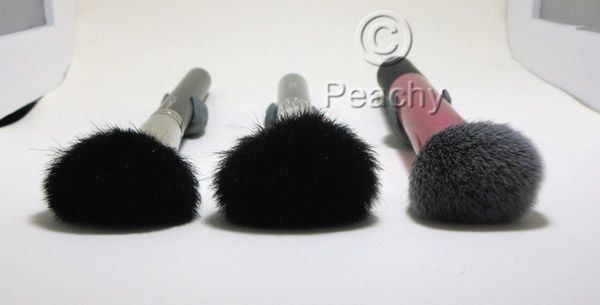
Duo-Fibre brushes are a mixture of two types of fibre, usually goat and synthetic, though two types of synthetic can also be mixed, like in the case of the Real Techniques Stippling Brush.  This mix of fibres allows for the bounce and resiliency of natural fibres with the softness of synthetic.  This mixture makes them good for stippling, as the bounce the goat gives heft to what would otherwise be a synthetic brush (which sometimes has the tendency to splay and flop).  Therefore, they are popular for foundations but are also good for cream and powder blushes, mineral products, bronzer, and anywhere you'd like to make a pigmented product go on more softly.  Because of the similarity of these brushes, I'm mostly going to talk about size differences (flashbacks to the very first brush post on flat-shader brushes....).
 
Large Duo-Fibre Brush
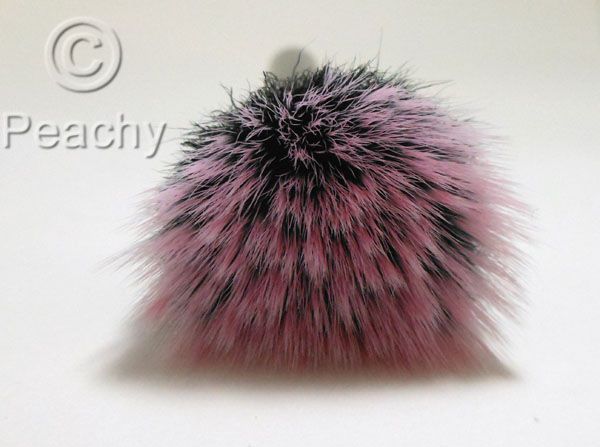
Here we have MAC's 187 brush.  I apologize that it is stained pink, but it won't come clean no matter how many times I use cleansing oil on it.  At least the staining indicates for what I use this brush most, which is blush.  It's great for a large blush application of a very dense blush.  I think this staining might be Illamasqua Panic.  It's also a popular one for foundation, though I don't quite get the stippling of foundation.  As I am theatre trained, for me, stippling is used to add natural veining effects, or to tone down shading, or add more red tones to old age makeup, places where the goal is to retain or create a texture, exactly the opposite of what you want in your foundation.  Then again, though I've heard of people claiming to stipple their foundation with these things, I've only seen people use these to buff, which in my opinion is better done with a denser brush. 
With powder or cream color cosmetics the stippling can create a translucent blush effect, so these brushes are great for that. They also work well for a very light dusting of bronzer or contour. They are often marketed with mineralized makeup, like MAC's Mineralized Skin Finishes, since those type of products can deposit too much product on denser brushes.  The large duo-fibre brush creates a diffused application over a large area.
 
Medium Stippling Brush 
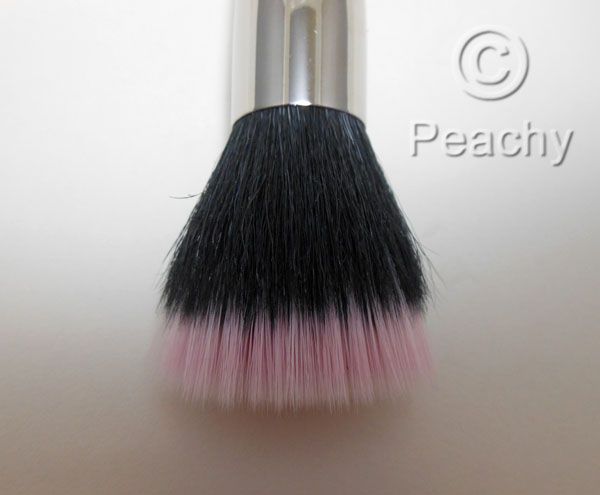
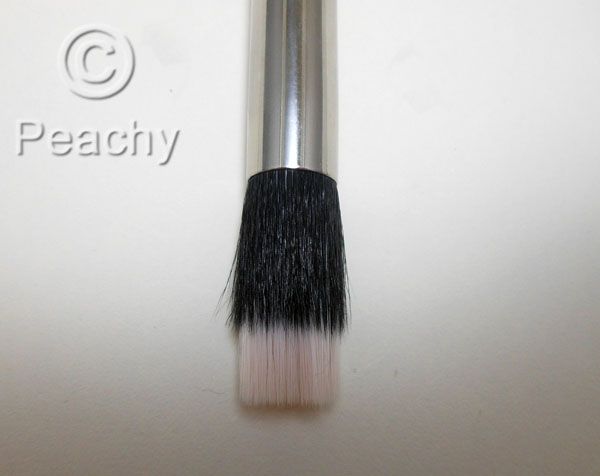
The Real Techniques Stippling Brush is much denser than the 187, it also has a shorter distance between the black fibres and the white fibres, both of which are synthetic.  This makes it work more like a flat top buffing brush than a stippling brush.  This works very well for foundation, as well as cream blush application, but, unless you want a very dense application, I wouldn't use it for powder blush.
 
 Small Stippling Brush
 
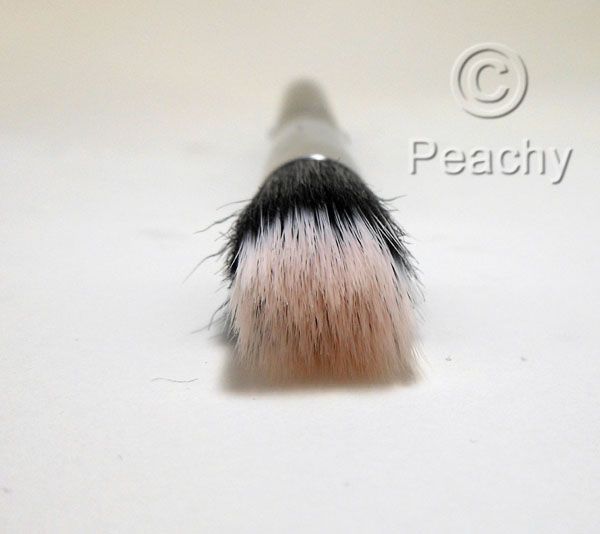
This brush, MAC 188, is a thinner version of the 187 above.  It has a farther distance between the two types of hair than the RT brush, so it is a bit floppier as well as thinner.  A lot of people also use this brush for liquid foundation.  I prefer it for blush, and often apply with this and blend out with the 187 for a bit more control than the 187 offers.  It's also great for highlighting cheekbones.
 
Short Stippling Brush
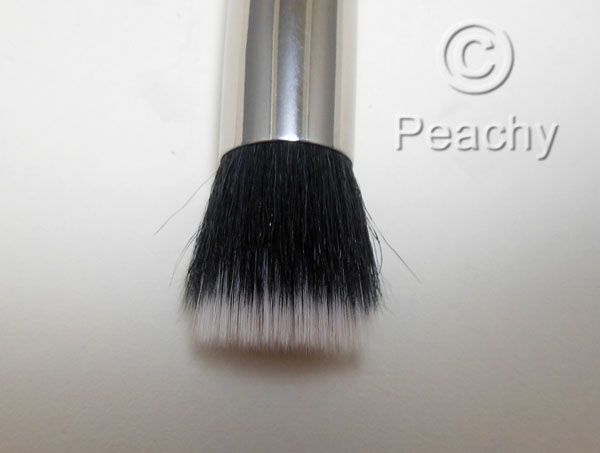
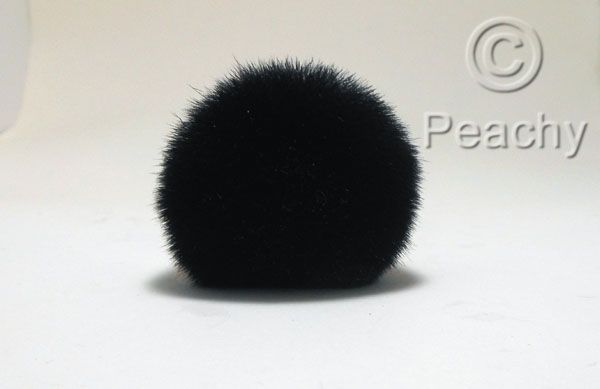
The MAC 130 is probably my favorite of all of these stippling brushes.  It's wider than the 188, but very short and denser.  It has fewer hairs I'd say than the RT, but since they are shorter, they are a bit stiffer nonetheless.  I imagine it would be great for cream foundation, as MAC often markets it for, and I absolutely love it with cream and liquid/gel blushes.  If I'm wearing a cream blush or a MUFE HD blush, I've likely applied it with this one.

 
Pros and Cons
Pros:     These brushes are versatile and useful.  The less dense, longer white bristled brushes are great for applying powder products sheerly, while the denser, shorter brushes are great for liquid and cream foundations and cream blushes.
Cons:     I don't think the aforementioned less dense brushes are good for liquid foundations.  The largest can be unwieldy to use for blush, unless you have a larger face or like blush over a large area--like I do. 
 
The Brushes featured in this post are the MAC 187 Duo Fibre Brush, Real Techniques Stippling Brush, MAC 188 Small Duo Fibre Face Brush, MAC 130 Short Duo Fibre Brush.  All were purchased by me and I am not compensated for featuring them.
Thursday, September 6, 2012

A Guide to Brushes: Eye Brushes, Part 7: Miscellaneous Brushes

Miscellaneous Brushes: The brushes that don't have a home.  It's a stretch to call most of these brushes, as some of them are...sponges.  Okay, I said it.  You'll probably want to stop reading now and curl up in the fetal position with some Hakuhodos.  Sponge applicators have the reputation as the most useless piece of crap in makeup.  I'm not going to try and tell you the naysayers are wrong, but they're not exactly right.  Just give these the benefit of the doubt, along with their random brethren, and you may find a use for them after all.
 
Sponge Applicator
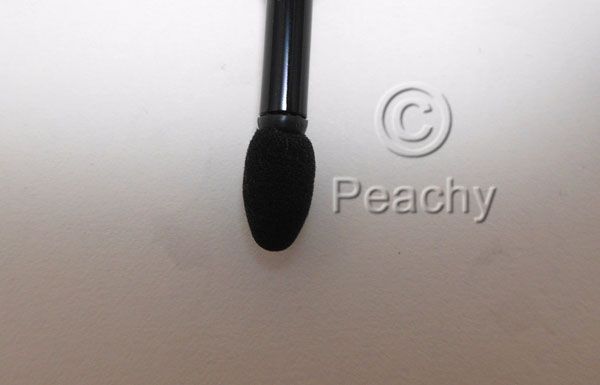
The joke of the makeup world, sponge applicators have a much worse reputation than they deserve.  Sure, they're thrown into every makeup palette from the cheapest to the most luxurious, but don't discount them immediately.  Forget any ideas you might have of blending with them, and consider a sponge applicator your secret weapon when it comes to powdery, glittery, or shadows with bad payoff.  Also good for packing any eyeshadow all over the lid, and they do a serviceable job of smudging pencil liner.  Oh, and you can still throw away the ones that come with eyeshadow compacts, they're still too short to hold comfortable.  (Well, actually, don't throw them away.  That's wasteful.  They're quite handy for arm swatching or if you have tiny doll hands.)  If you're interested in trying out the Cousin Oliver of makeup applicators, find one on a long handle (with replaceable heads if you can find it), like this one from NYX.
 
Silicone Glitter Applicator
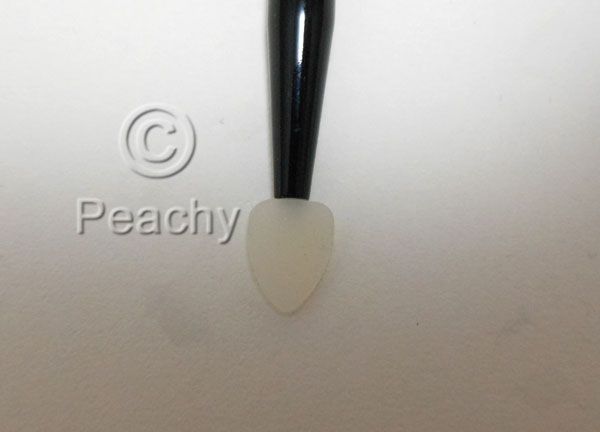
This may look like a sponge applicator, but it's made out of silicone.  It's specifically formulated to use with loose glitters, pigments, and glittery eyeshadows to reduce fallout.  It does actually work, in case you were wondering, and I'd probably use it more often if I liked glitter or loose eyeshadows, but you do have to pack on a lot to get much payoff.  This one was made by Sephora, and I'm pretty sure it's discontinued, but I know some other brands make something similar.
 
Sponge Smudger
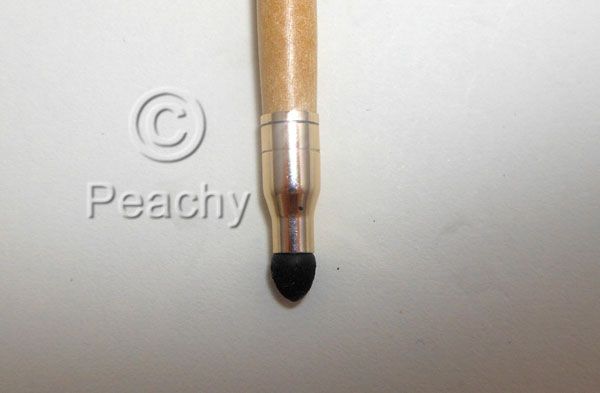
The pointy pencil-brush style cousin of the sponge applicator, the sponge smudge is often found on the end of pencil liners (though this ancient Body Shop one was not).  It's made for smudging liner, and it usually tends to remove more than it smudges, but it's fine in a pinch. 
 
Spoolie Brushes
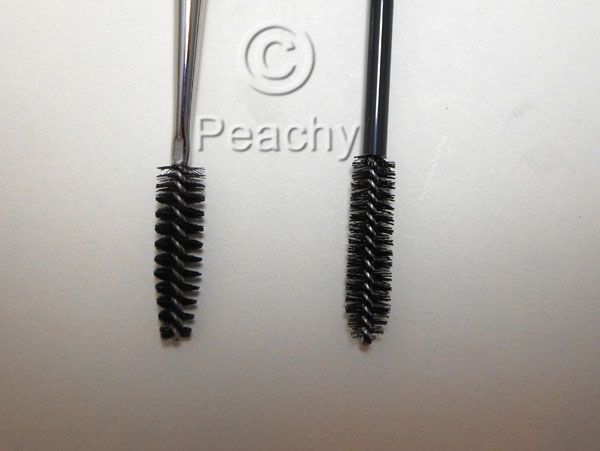
Spoolie brushes look like mascara wands, and if you're so inclined, you could just wash an old mascara wand and use that.  The one on the left is a MAC 204, and the other is a bulk one-use mascara applicator (good for a kit).  These are good for applying mascara, if you're not a fan of the brush, or for hygiene purposes (though that pertains more to the disposable one).  They work well for combing out already applied mascara, especially if metal combs scare you.  They are most useful for personal use, in my opinion, for brushing through eyebrows to neaten them, diffuse previously applied product, or to apply a gel through the brow hairs (like MUFE Aqua Brow).
 
Mascara Fan Brush
Another way to apply mascara, a fan brush is great for a more natural mascara look, or to apply mascara to the top of the lashes (if you're asking "why would anyone do this" you obviously don't have blond eyelashes), it can also build up mascara and provides more separation than a traditional mascara brush.  This one is a art brush by the Princeton Art and Brush company, but I know MAC has one in their Pro line, too.
 
Pros and Cons
Pros:  Some of these brushes seem at first glance like the Cousin Oliver of makeup brushes.  While some of them (hello Sponge Smudger, why I have kept you all these years, I'll never know) are certainly useless, some of these brushes--the mascara fan brush, and, yes, even the sponge applicator--have their place in your makeup drawer.  If you use a lot of glitter, you may want to hunt down a silicone applicator, and everyone needs a spoolie brush, even if it comes with your mascara.
Cons:  Some of this stuff is worthless garbage.  They throw those cheap sponge applicators into eyeshadow compacts and smudgers onto the end of eyeliners for a reason:  they're cheap.  As separate brushes, none of these are essentials. 
 
The brushes featured in this post are:  NYX Sponge applicator, Sephora Professional Glitter Eyeshadow Brush #24 (dc'd), The Body Shop Line Softener, MAC 204 Lash Brush, Disposable mascara applicator from a Beauty Store (I misplaced the bag after this photo was taken, so I don't know the brand), Princeton Art and Brush Company Fan Brush 3050FN Size 20/0.  All were purchased and I received no compensation for featuring them.